Oct 17, 2023 / Technique / 3 min read
ND Filters and Shutter Angle in Bright Georgia Light
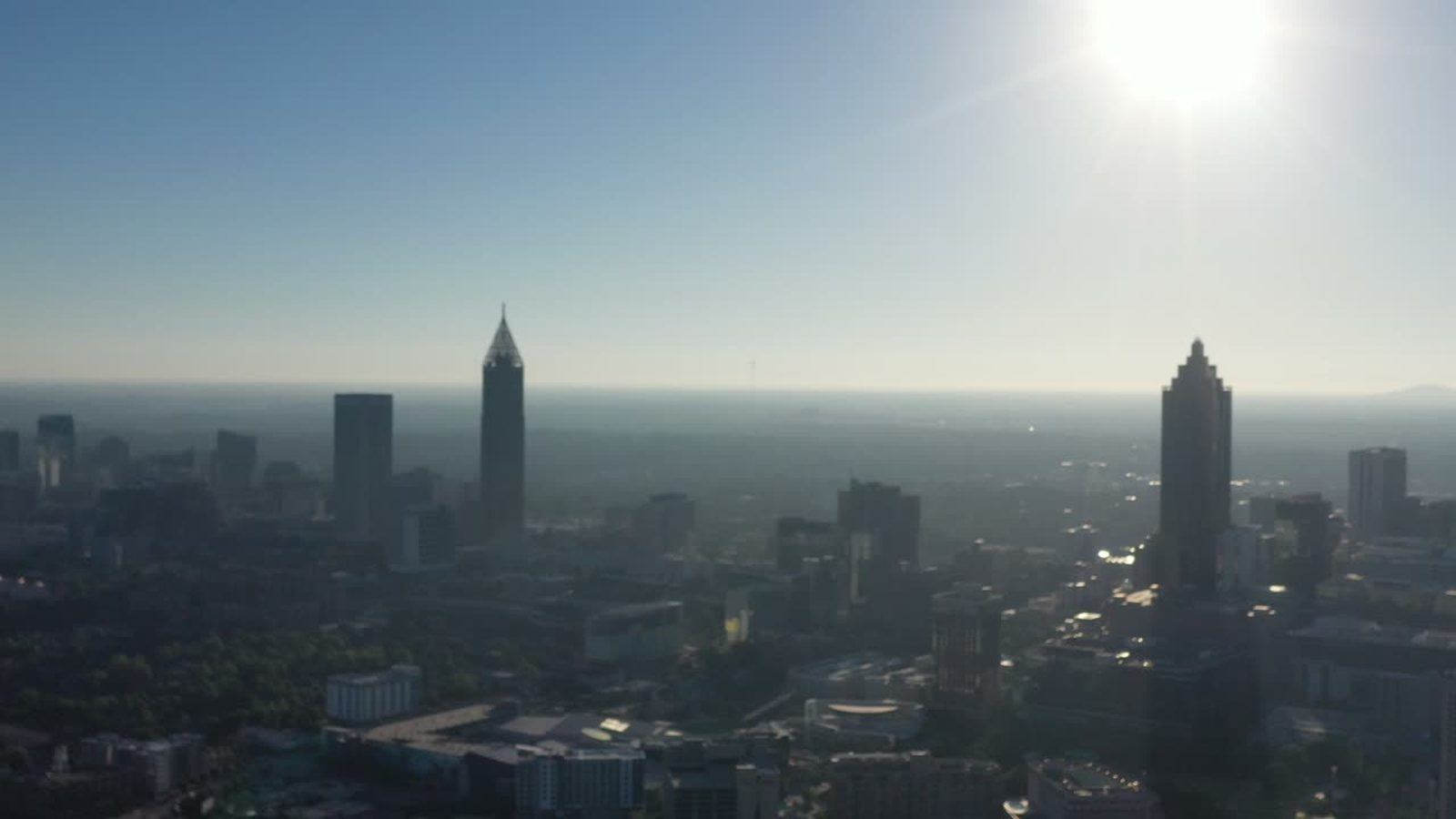
A client sent us footage last month shot on a good aircraft, in good light, over a genuinely interesting property. It looked wrong and they could not say why. Every pan had a faint stutter, like the video was being played back a frame at a time. The aircraft was fine. The shutter was doing exactly what it had been told to do.
The rule that makes motion look normal
Film and video have always faked motion the same way. Each frame carries a little blur, and your eye stitches those blurred frames into movement. The convention is to keep the shutter speed at roughly double the frame rate. Shoot at 24 frames per second and the shutter sits near 1/48. Shoot at 30 and it sits near 1/60. Cinematographers call this a 180 degree shutter angle.
Break that rule in one direction and motion turns crisp and stuttery. Break it the other way and everything smears. Neither looks like the footage people are used to seeing.
Why Georgia daylight breaks it
The problem is that a shutter near 1/48 lets in a lot of light. On a clear October afternoon over Midtown, with a bright sky and reflective glass and pale concrete, the sensor is overwhelmed long before you reach a correct exposure. The camera compensates by closing the shutter down, often to 1/500 or faster, and the moment it does, the blur that made motion look natural disappears.
This is why so much aerial footage taken at noon has that video game quality. It is not the aircraft, the codec, or the operator's flying. It is one setting doing something reasonable for a still photograph and wrong for a moving picture.
What an ND filter does
A neutral density filter is a piece of dark glass in front of the lens. Neutral means it darkens everything by the same amount rather than shifting the colour, so it costs you light and nothing else. With less light reaching the sensor, you can keep the shutter where it belongs and still expose correctly.
They are sold in stops. An ND8 cuts three stops, an ND16 cuts four, an ND32 cuts five, an ND64 cuts six. On a clear Georgia summer day over open ground we usually land on an ND32 or ND64. In autumn overcast, an ND8 is often plenty. In the last twenty minutes before sunset you may want no filter at all, which is one of the reasons that timing a flight around the light matters as much as the flying does.
How we work it out in the field
We do not calculate. We land on a starting filter from experience, set the shutter to double the frame rate, and then read the histogram and the zebras. If the highlights are clipping, the filter is too weak. If the image is muddy and the ISO has crept up to hold exposure, the filter is too strong. Two swaps at the pad beats guessing in the air, and it takes under a minute.
One warning worth passing on. Variable ND filters, the kind you twist, are convenient and they will save you on a run and gun day. They also cross polarise at the extremes and leave an X shaped dark band across a wide sky. On a drone, where the sky fills half the frame, that shows up immediately. Fixed filters are less convenient and more predictable.
What it buys the client
Nobody watching a finished video says the shutter angle was correct. They say the footage feels expensive. Motion blur is a large part of what separates aerial video that looks like a real production from aerial video that looks like a phone strapped to a kite, and it is decided in the first thirty seconds of a shoot, before anything is filmed.
It also protects the grade. Footage exposed properly with the right filter holds up when it reaches the colour suite. Footage that was underexposed and pushed in post falls apart in the shadows, and no amount of grading brings it back.
If you have a shoot coming up in bright light and you want it to cut together with the rest of your material, see how we approach aerial video or send us the brief and we will tell you what the day should look like.