Feb 17, 2026 / Post production / 3 min read
Vertical Video From a 16:9 Shoot: Reframing Aerials for Social
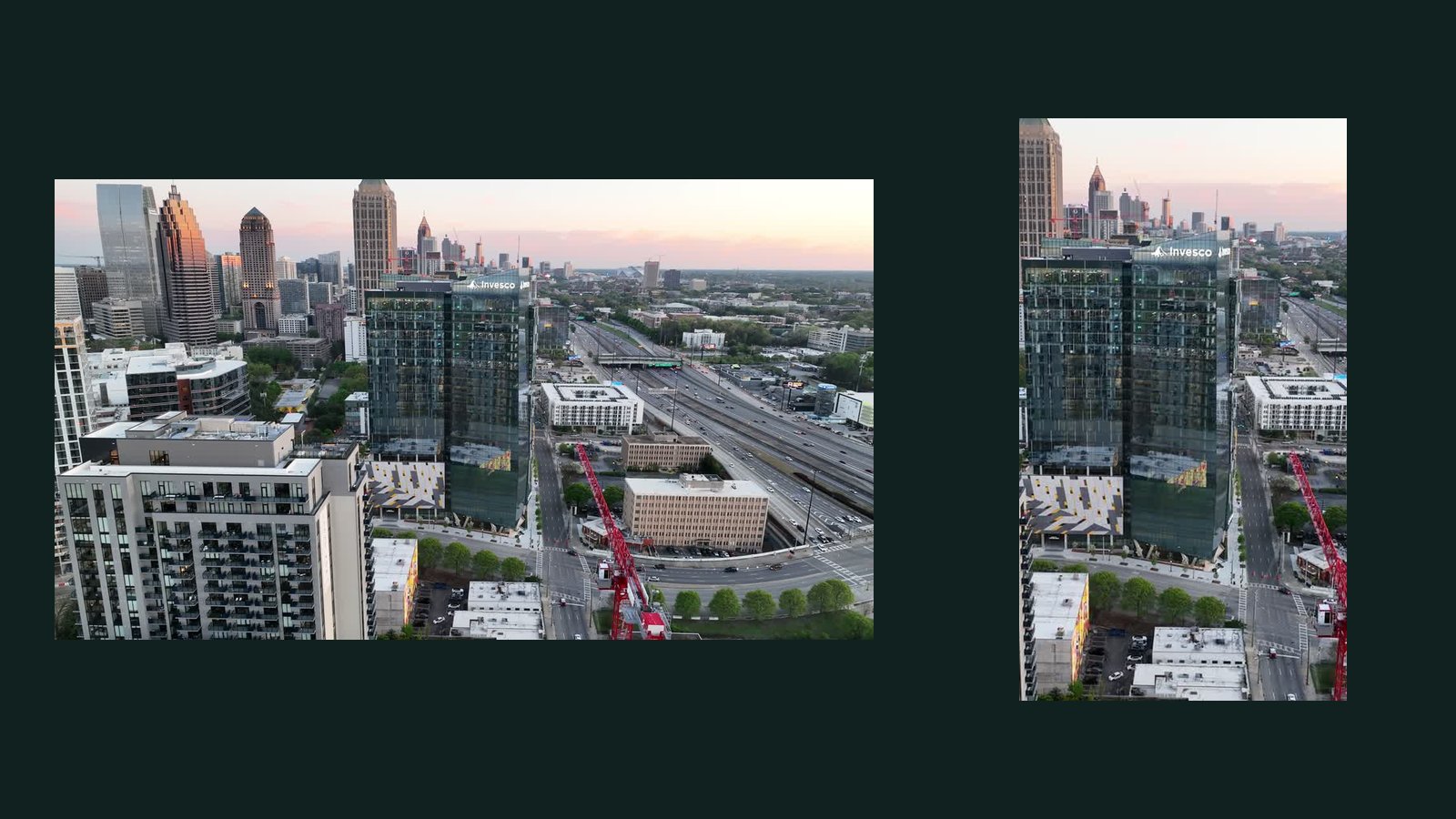
Every client now wants the same footage in two shapes. The landscape cut for the website and the presentation, and a vertical cut for social. Cropping one into the other is where a good aerial shoot quietly falls apart.
Why aerial suffers most
Aerial photography is fundamentally about relationship. A property and the woods behind it. A building and the skyline it sits in. A site and the road it connects to. All of that information lives horizontally, and a vertical crop throws away three quarters of the width, which is to say it throws away the point.
Ground based footage survives the crop better because its subject is usually a person or an object in the middle of the frame. An aerial wide has no middle in that sense.
What actually survives a crop
Vertical moves. A rising reveal, a descent toward a subject, a top down shot moving along a road or a river, a straight down orbit over a single building. These all keep their meaning in a tall frame because the story is in the vertical axis to begin with.
Tall subjects, obviously. A tower, a crane, a chimney, a waterfall. If the subject is taller than it is wide, the vertical frame is the correct one and the landscape version is the compromise.
Anything shot close. The tighter the shot, the less the crop costs you, which is why detail passes over a roof or a piece of equipment reframe painlessly.
Shooting with the crop in mind
The cheapest fix is to compose for both. Keep the subject centred rather than on a third, leave headroom and footroom, and avoid putting essential information at the left and right edges. A shot framed this way is slightly less interesting in landscape and completely usable in both, which is a trade most projects should take.
Shooting at higher resolution than delivery gives real room. A 4K capture delivered at 1080 leaves enough pixels to punch in and reposition without softening. This is the single most useful habit for social deliverables, and it costs nothing but card space.
Reframing in post
Work from the wide, add a vertical sequence, and animate the crop position rather than accepting a static centre. Most editors will do this with a simple position keyframe, and following the action inside the frame turns a dead crop into something that reads as a deliberate move.
What to avoid: blurred or mirrored side bars, which look like an apology. A shot that genuinely will not crop should be left in landscape inside the vertical frame with a plain background, or cut from the vertical version entirely.
When to fly a separate pass
If social is the primary channel rather than an afterthought, fly for it directly. Ten minutes at the end of a shoot doing three or four vertical specific moves, rises, descents, and a top down travelling shot, gets you material that was designed for the format instead of salvaged for it.
That decision belongs in the brief. It is the difference between a campaign that looks native on a phone and one that looks like a website video someone squeezed.
Same principle we applied to listing videos: shoot for the place it will be watched.
If you need both shapes from one shoot, say so at the brief stage and we will build the shot list around it.