Sep 18, 2023 / Regulation / 3 min read
Remote ID Just Got Pushed to March 2024
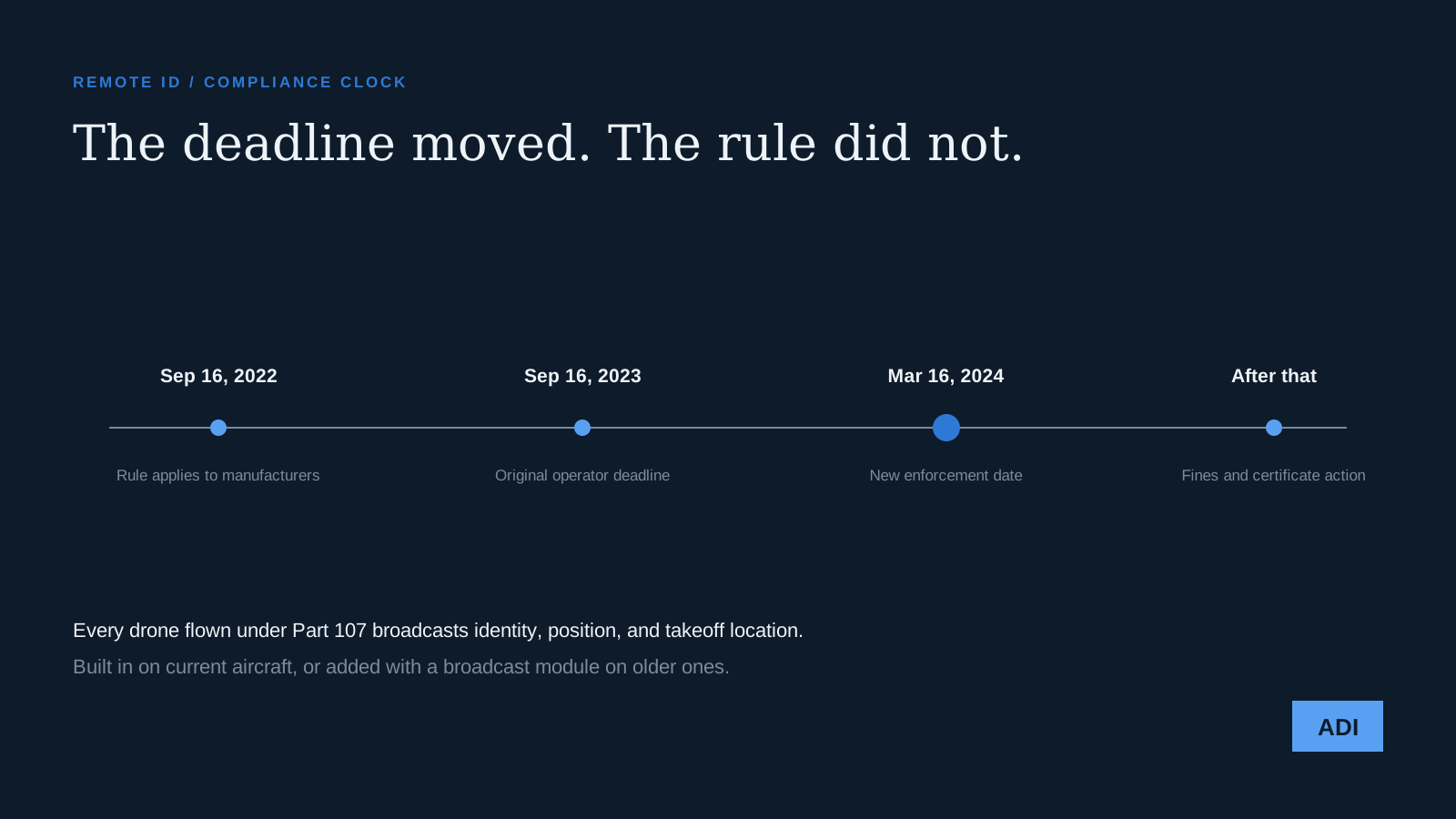
The FAA announced this month that it will hold off on enforcing the Remote ID rule until March 16, 2024. The original date was this week. If you have a project on the calendar and you have been reading headlines about drones going dark, nothing about your shoot changes.
It is worth being precise about what moved, because the reporting has been muddy. The rule did not change. The date the FAA starts writing violations did.
What Remote ID actually is
Remote ID is a broadcast. While the aircraft is flying it sends out a small packet over Bluetooth or Wi-Fi that anyone nearby can pick up with a phone app. The packet carries a serial number or a session ID, the aircraft position and altitude, its speed, the location of the control station or the takeoff point, and a time mark.
It does not carry a pilot name, a client name, or anything about the job. It is closer to a licence plate than to a flight log. Law enforcement can match the serial to a registration if they have reason to, and that is the point of it.
Why the date moved
The delay is a supply and paperwork problem rather than a policy reversal. Plenty of operators bought broadcast modules that were not yet approved, and some manufacturers were slow getting firmware out for older airframes. Rather than start issuing violations to pilots who had ordered hardware that had not shipped, the FAA gave everyone until March.
Our fleet was already compliant, because the aircraft we fly for client work broadcast natively. If you are hiring a crew this autumn, that is a fair question to ask them, and a professional operator should be able to answer it in one sentence.
What it changes on a job site
Very little, and that is the honest answer. The broadcast is passive. It does not need a data connection, it does not need permission, and it does not slow anything down. What it does change is accountability. When a neighbour calls to complain about a drone over a construction site, the operator flying legally can now be distinguished from the one who is not.
For clients that is quietly good news. A lot of the friction around aerial work comes from the assumption that nobody can tell who is up there. After March, somebody can.
What to check before your next flight
If you fly your own aircraft, three things are worth confirming now rather than in March. Check that your airframe is on the FAA declaration of compliance list. Check that its firmware is current, because on several models the broadcast arrived in an update rather than in the box. And if you fly an older airframe that will never support it, price a broadcast module now, since the ones that are actually approved sell out in the weeks before a deadline.
If you hire a crew, none of that is your problem. It is theirs, and it should already be handled. The same goes for airspace authorization, currency, and insurance, which we cover in safely flying drones near buildings.
The bigger direction
Remote ID is not really about this year. It is the foundation the FAA needs before it can allow routine flights beyond the pilot's line of sight, because a system that lets aircraft see each other has to start with aircraft announcing themselves. Everything the agency has said about deliveries, long inspection corridors, and automated flights runs through this rule first.
That future is further out than the trade press suggests. For now, the practical effect is a small broadcast from a small aircraft, and a March date in the calendar.
If you have a project this autumn and you want a crew that is already compliant and already insured, tell us what you are shooting. We fly across Atlanta and the rest of Georgia, and we handle the paperwork so that you do not have to think about it.