May 21, 2024 / Regulation / 2 min read
The FAA Reauthorization Act of 2024 and the Road to BVLOS
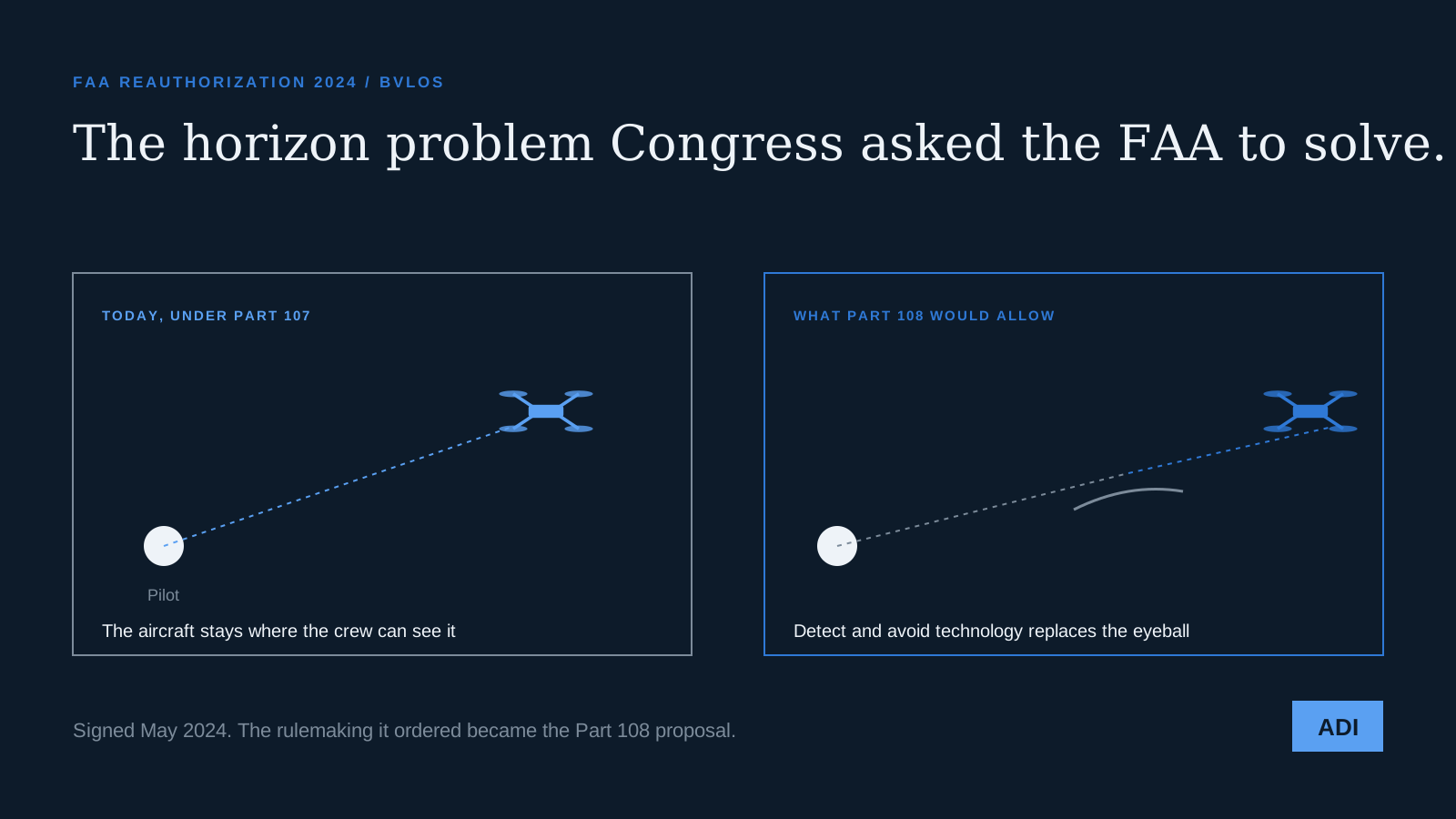
The FAA Reauthorization Act was signed this month, funding the agency for five years. Buried inside a bill mostly concerned with airports and airline consumer rules is the most significant instruction the drone industry has had in years: write the rule that allows routine flight beyond visual line of sight, and do it on a deadline.
What visual line of sight costs today
Under Part 107 the crew must be able to see the aircraft with their own eyes. Not through the camera, not on the map, with their eyes. That single sentence shapes the economics of everything we do.
Inspecting a transmission corridor means driving to a spot, flying what you can see, packing up, driving to the next spot. Surveying a large site means the same leapfrogging. Anything genuinely linear, a pipeline, a rail line, a river, costs a multiple of what it would cost if one aircraft could simply fly the length of it.
Waivers exist. They are granted per operation, take months, and arrive with conditions specific enough that they do not generalise to the next job.
What the Act orders
The Act directs the FAA to issue a proposed rule for routine BVLOS operations and sets deadlines for doing it. It also reauthorises the test site programme, creates grant money for drone infrastructure inspection and for workforce training, and pushes on integration work that has been drifting for years.
The important word is routine. Today, flying past the horizon is an exception you apply for. The instruction is to make it a standing permission that a qualified operator can work under, the way Part 107 made commercial flying itself routine in 2016.
What would have to be true
Three things, roughly. Aircraft need a way to detect and avoid other traffic without a human watching, which means onboard sensing, ground based radar, or both. There needs to be an accepted picture of who is where, which is what Remote ID quietly laid the groundwork for. And there needs to be a right of way convention, because when a crop duster and an inspection drone want the same piece of low altitude sky, somebody has to yield.
That last one sounds like a footnote. It is not. General aviation and agricultural operators have strong opinions about being asked to give way to unmanned traffic, and that argument will shape the final rule more than the technology will.
What changes for a client this year
Nothing. A proposed rule is not a rule, and the gap between a congressional deadline and a published regulation is measured in years, not months. Anyone selling you BVLOS inspection services in Georgia this year is either operating under a specific waiver they can show you, or they are describing something they cannot legally do.
What is worth doing now is thinking about which of your recurring jobs are expensive purely because of the line of sight constraint. Those are the ones whose economics change first when the rule lands, and knowing which they are makes the eventual transition a planning exercise rather than a scramble.
For everything that is possible today, from utility inspection to site documentation, tell us what you need covered.