Dec 23, 2025 / Industry / 3 min read
The Covered List Decision: What Changed for Drone Buyers Overnight
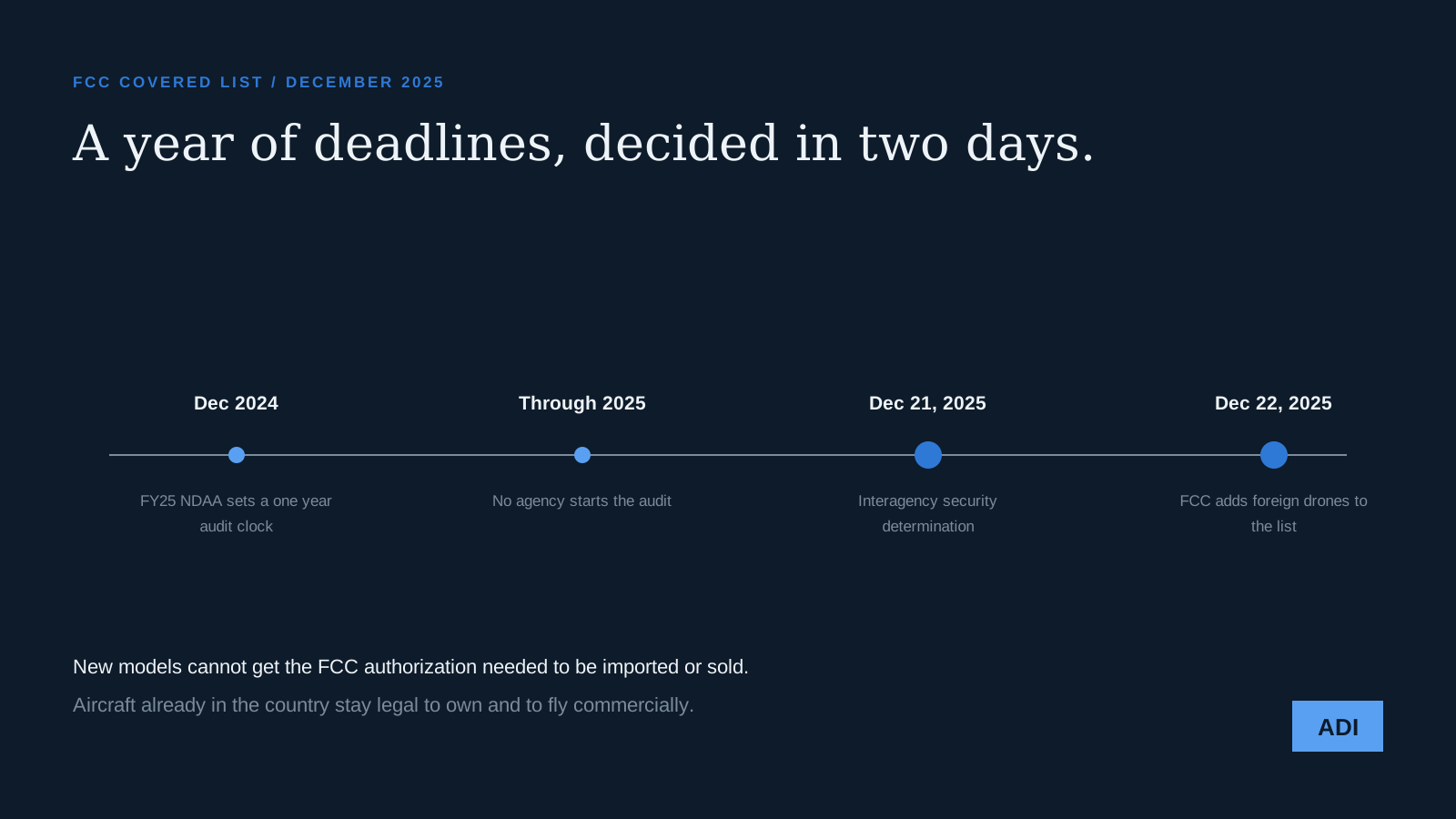
The FY25 National Defense Authorization Act, passed a year ago, contained an unusual mechanism. It required a national security agency to audit certain foreign drone manufacturers within one year. If no agency conducted the audit, the manufacturers would be added to the FCC Covered List automatically.
The year ran out this month. No audit had been conducted, despite the manufacturers themselves publicly asking for one. On December 21 an interagency body issued an affirmative national security determination, and the FCC implemented it the following day, going further than the statute required by adding foreign produced drones and certain components as a category rather than naming two companies.
What being on the list means
The Covered List governs equipment authorization. Any radio device sold in the United States needs FCC authorization, and equipment on the list cannot receive it. The effect is on new models entering the market rather than on existing ones.
So: aircraft already in the country remain legal to own and to fly commercially. Nothing about your existing fleet, your existing certificate, or your existing operations changed on December 22. What changed is that new models cannot be imported or sold, and that the supply of what is already here is now finite.
What it means practically
For operators, three things. Spare parts and replacement airframes get harder to find and more expensive, so anyone running a fleet is now thinking about depth rather than about the next upgrade. Fleet planning horizons extend, since the replacement cycle everyone was used to has stopped. And the domestic and allied manufacturers get a market they have been unable to win on price.
For clients, almost nothing this month. The aircraft flying your site in January will be the same one that flew it in December. The change is slower than that: over the next couple of years the equipment landscape shifts, and it shifts toward hardware that costs more for the same capability.
The parts nobody is sure about
There is litigation. Petitions for reconsideration are being filed, and the courts will be asked whether a categorical action of this scope was within the agency's authority. There will be exceptions, and the shape of them matters enormously to anybody buying equipment next year, particularly around cleared lists and domestic content thresholds.
Anyone telling you confidently how this resolves is guessing. What is certain is the direction of travel, which has been consistent across two administrations and both parties for several years now.
What we are doing
We are not panic buying, and we are not pretending the aircraft we already own stopped working. We have deepened spares for the airframes we rely on, and we are flying and evaluating alternatives properly rather than waiting to be forced into a decision. Where an alternative is genuinely worse for a job we will say so.
The questions worth asking an operator have not changed, and we listed them in five questions before hiring a drone pilot. What we are not doing is passing on a scarcity premium that has not reached us. If and when equipment costs move our pricing, we will explain it rather than quietly adjusting a number.
If you are buying
If you fly your own aircraft for site work, this is the moment to think about the next three years rather than the next purchase. Consider what happens if a controller fails, what your spares position is, and whether the operation depends on a specific model that is now finite.
If you hire crews, this is not your problem to solve. It is one worth asking about, since an operator with a coherent answer about their fleet is an operator who will still be flying your site in two years.
Talk to us about work in 2026 and we will be straightforward about what we fly and why.