Aug 19, 2025 / Regulation / 3 min read
Part 108 in Draft: What Beyond Visual Line of Sight Would Change
Earlier this month the FAA published its proposed rule for routine flight beyond visual line of sight. Part 108 is the thing the industry has been asking for since Part 107 arrived in 2016, and it exists now as a document you can read rather than as a promise in a reauthorisation bill.
It is a proposal. Comments are open for sixty days and the final rule will differ. Still, this is the clearest picture yet of what the FAA intends.
What it replaces
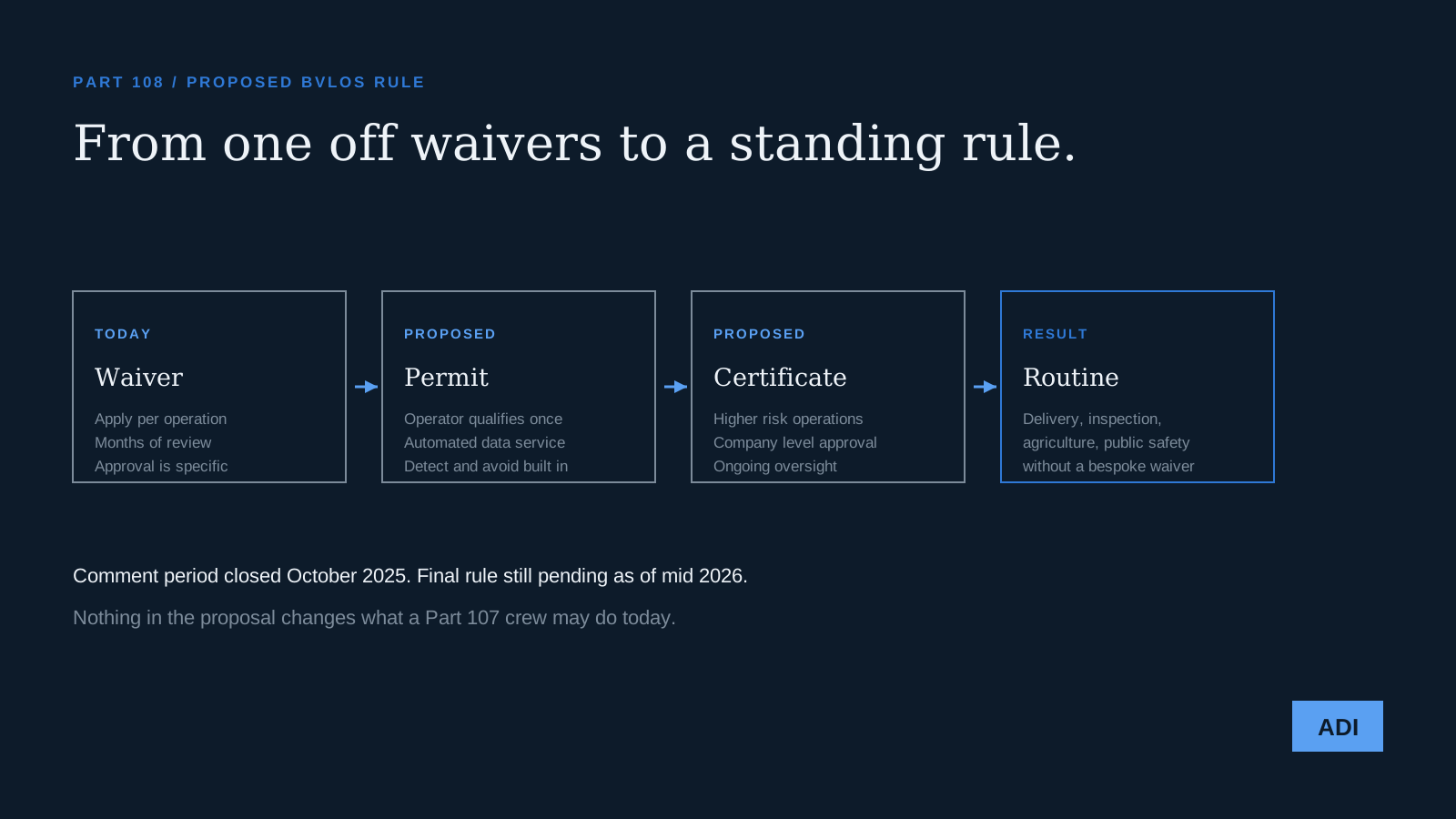
Today, flying past the point where the crew can see the aircraft requires a waiver, granted per operation, taking months, and written narrowly enough that it does not transfer to the next job. That is workable for a utility running one long inspection programme and hopeless for everybody else, which we described when the 2024 reauthorisation ordered this rulemaking.
Part 108 proposes standing permissions instead. An operator qualifies once, against defined requirements, and then flies within that framework without applying each time.
The shape of it
The proposal splits operations by risk. Lower risk operations sit under a permit, with automated data services handling airspace deconfliction and onboard detect and avoid handling the rest. Higher risk operations require a certificate, which is a company level approval with continuing oversight, closer to how an airline is regulated than to how a photographer is.
Both paths lean on technology rather than on a human watching. That is the fundamental trade. Today a pair of eyes is the safety system, and the rule is an attempt to specify what has to be true for a machine to take that role.
The fight that will shape the final rule
Right of way. The proposal sets out who yields when an unmanned aircraft and a manned one want the same low altitude airspace, and it has produced the sharpest objections. Agricultural operators, helicopter pilots, and general aviation groups all work in the same few hundred feet, and any presumption that they should give way to unmanned traffic is contested hard.
The other live argument is electronic conspicuity, meaning what every aircraft must broadcast so the system can see it. Requiring that of manned aircraft that have flown for decades without it is expensive and unpopular, and not requiring it leaves a gap in exactly the airspace the rule is trying to organise.
What it means for a client this year
Nothing yet, and be sceptical of anyone who tells you otherwise. Until the final rule is published, beyond visual line of sight work still requires a waiver, and any operator offering it should be able to show you theirs.
What is worth doing is identifying which of your recurring jobs are expensive only because of the line of sight constraint. Long corridors, large solar sites, pipeline and rail, multi building campuses inspected one at a time. Those are the jobs whose economics change first, and knowing which they are means you can move quickly rather than start thinking about it after the rule lands.
Our reading
The proposal is more ambitious than we expected and the timeline in it is more optimistic than anything the FAA has delivered before. The comment period will be busy, the right of way section will change, and the rule that eventually publishes will be narrower than this draft.
None of which makes it unimportant. This is the first time the agency has written down what routine unmanned operation looks like, and everything after this is negotiation over the details.
For work that is possible under today's rules, from utility inspection to site survey, tell us what you need covered.