Nov 19, 2024 / Inspection / 3 min read
Thermal From the Air: Heat Loss and Wet Insulation Before Winter
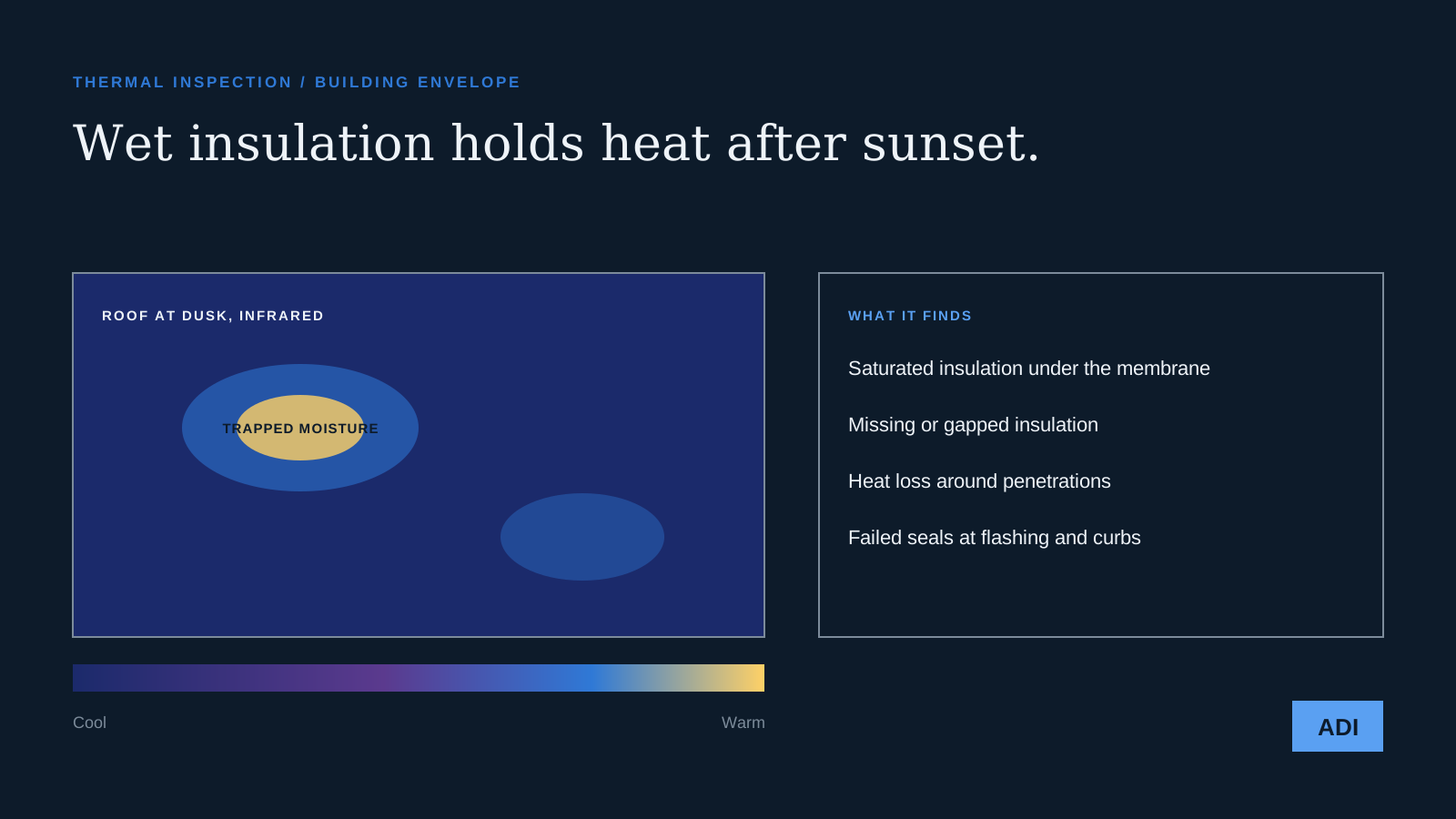
A thermal camera does not see wet. It sees temperature. The reason aerial infrared is useful on a roof is a quirk of physics: water holds heat longer than dry insulation does, so after a warm day the saturated areas of a roof stay warm into the evening while everything around them cools.
Fly at the right hour and those areas glow. Fly at the wrong hour and you get an even grey rectangle and a wasted trip.
The window
The scan wants a day with decent solar gain followed by a clear evening. We fly starting roughly an hour after sunset, once the surface has released its heat but the wet areas have not yet caught up. The roof needs to be dry, so nothing within a day of rain. Wind steals the differential, so a calm evening matters. Heavy cloud during the day means there was never enough heat to store in the first place.
In Atlanta, autumn is close to ideal. Warm afternoons, cool evenings, and a decent run of dry days.
What shows up
On a low slope commercial roof, saturated insulation appears as irregular warm blooms, usually spreading from a seam, a penetration, or a failed curb. The shape matters. Water migrates under the membrane, so the warm area is often much larger than the entry point, which is why a leak that appears in one office is frequently repaired in the wrong place.
On a building envelope flown obliquely rather than straight down, you get missing insulation in wall cavities, air leakage around windows and doors, and heat escaping through thermal bridges. That is a different flight with a different purpose, usually driven by energy cost rather than by a leak.
What infrared cannot tell you
It cannot tell you how deep the moisture goes, whether the deck below is compromised, or when the water arrived. It cannot see through the membrane. A warm area is a strong indication of trapped moisture and it is still an indication rather than a measurement, which is why a thermal survey is normally followed by a core sample at a couple of the flagged locations to confirm what is down there.
Anyone selling a thermal flight as a definitive moisture map is overselling it. What it genuinely does is tell a roofing consultant where to spend their day, which turns a whole roof investigation into three targeted cores.
Radiometric matters
There is a real difference between a camera that produces a pretty false colour picture and one that records a temperature value for every pixel. The second is radiometric, and it lets the analysis happen after the flight, with the scale adjusted to bring out a differential of a couple of degrees. Non radiometric imagery bakes in whatever palette and range the camera chose in the moment, and it cannot be reanalysed.
For anything going to an insurer or a consultant, radiometric is the only sensible option.
Who this is for
Property managers with flat roofs and a leak they cannot locate. Owners deciding between a repair and a replacement, where knowing that fifteen percent of the insulation is wet changes the answer. Facilities teams with an energy budget and a suspicion about a particular elevation. And anyone buying a commercial building who would like to know what is under the membrane before they own it.
Roof condition from the visible spectrum, which we covered in drone roof inspections, answers a different question. The two together are a fairly complete picture.
If you have a building with a leak nobody can find, tell us about it and we will find you an evening with the right weather.