May 19, 2026 / Technology / 3 min read
Drone in a Box: Automated Flights Over a Fixed Site
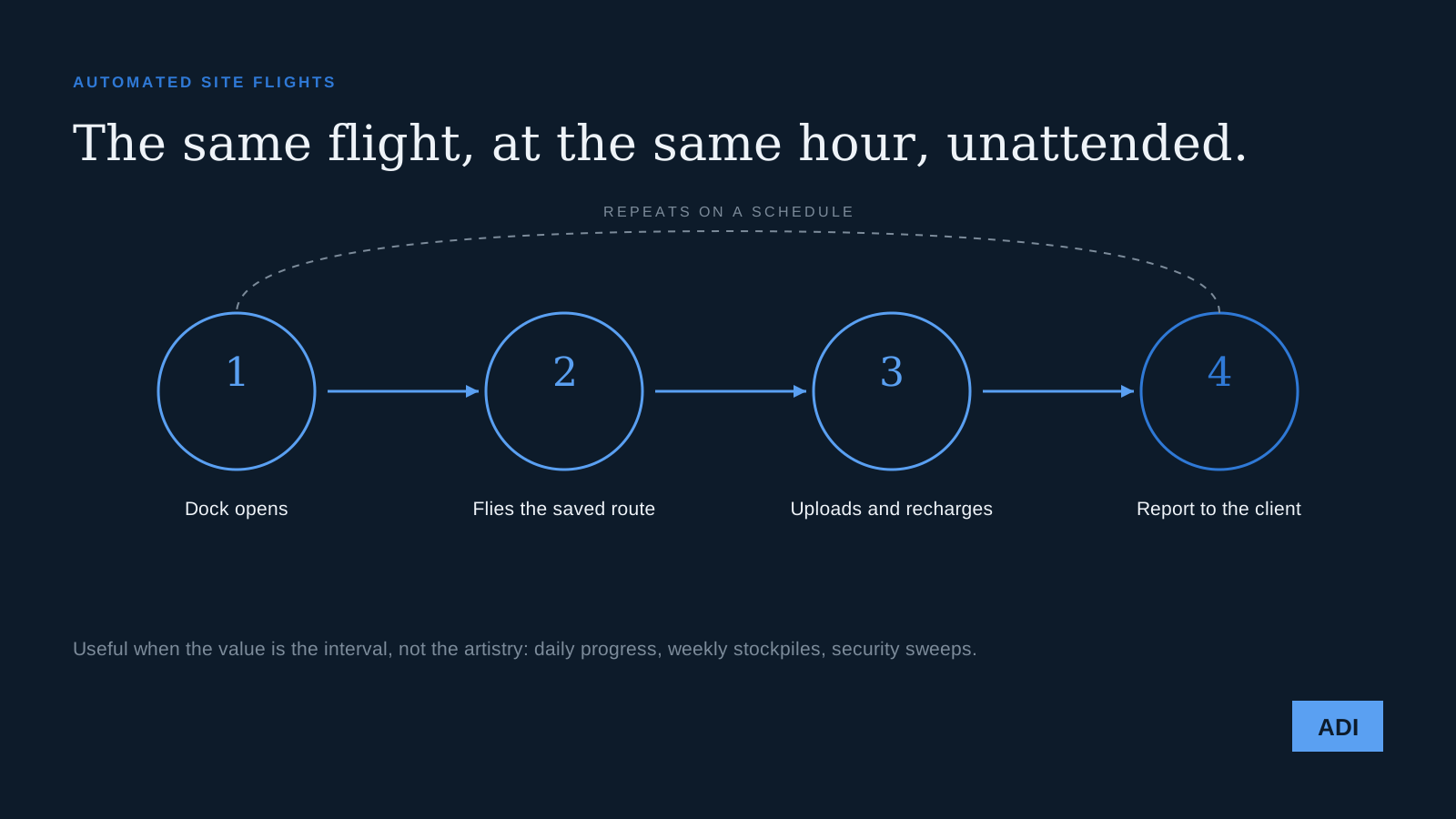
A docked system is a weatherproof box on a site with an aircraft inside it. On a schedule, the lid opens, the aircraft flies a route it has flown a hundred times, lands, recharges, and uploads. Nobody drives anywhere.
It is the least glamorous corner of this industry and, for a specific set of jobs, the most useful.
What it is actually for
Repetition. A site where the same imagery, from the same positions, on a predictable interval, is worth more than a beautiful capture once a quarter.
Large construction sites where a daily overhead answers questions before the morning meeting. Quarries and material yards where stockpile volumes drive the accounting. Solar sites, substations, and industrial facilities where a scheduled sweep beats a call out. Security patrols on a large perimeter.
In each case the aircraft is not doing anything a crew could not do better. It is doing something a crew could not do affordably every single day.
What it is not for
Anything requiring judgement. Marketing footage, where the entire value is that a person chose the moment and the frame. Damage assessment, where the interesting thing is by definition not where you expected it. Anything on a site that changes shape enough that a saved route stops making sense.
A docked system flies the route it was given. If the interesting thing happens fifty metres outside that route, it is not in the data.
The constraint that still bites
Visual line of sight. Under current rules somebody still has to be able to see the aircraft, which rather defeats the purpose of an unattended system. Operations today run either with a person on site, which erodes the economics, or under a waiver that permits the specific automated operation, which takes months to obtain and is written narrowly.
This is precisely the constraint Part 108 is meant to relieve, and it is why the docked drone market has been perpetually about to arrive for several years. The final rule has still not published as I write this, and the sensible position is to plan for it without betting a budget on a date.
The unglamorous practicalities
Power and connectivity at the dock, which on a construction site means a plan that survives the site changing around it. Weather, since a system that cannot launch in Georgia summer conditions will miss a lot of days between June and September. Physical security, because an expensive box on a site is an expensive box on a site. And data volume, because a daily capture across a year is a large archive that somebody has to store, index, and eventually look at.
That last one is where most deployments disappoint. Collecting daily imagery is easy. Having somebody actually review it, and having a system that flags what changed, is the part that produces value, and it is the part that gets budgeted last.
Where we land
For the majority of Atlanta projects, a scheduled crew visit remains the better answer, for the reasons in monthly progress photography. A monthly or weekly flight by a person costs less than a dock, produces better imagery, and comes with judgement attached.
Where a docked system earns its place is daily or more frequent capture on a long running site, and that is a narrower set of projects than the marketing suggests.
If you think your site is one of them, tell us what you would want captured and how often, and we will be honest about whether the automation pays for itself.