Aug 11, 2026 / Regulation / 3 min read
The LiDAR Ban and Your Mini: What Docket 26-189 Would Do
Last month the FCC opened docket 26-189, proposing to prohibit the import and sale of any foreign made drone on its Covered List that contains or integrates a LiDAR sensor. The reasoning offered is that LiDAR belongs in a military grade category of capability. Comments close on September 2.
One clarification first, because it is being reported both ways. This is the FCC, not the FAA. It is an equipment authorization question rather than an aviation safety question, and it reaches the shop rather than the airspace.
Why this lands on small camera drones
The word LiDAR sounds like survey equipment strapped under a large airframe. On current consumer aircraft it is also the obstacle avoidance sensor, a small unit that measures distance so the drone does not fly into a branch in poor light.
That is why a proposal aimed at military grade capability reaches a 249 gram drone that mostly photographs houses.
The Mini 4 Pro is not caught
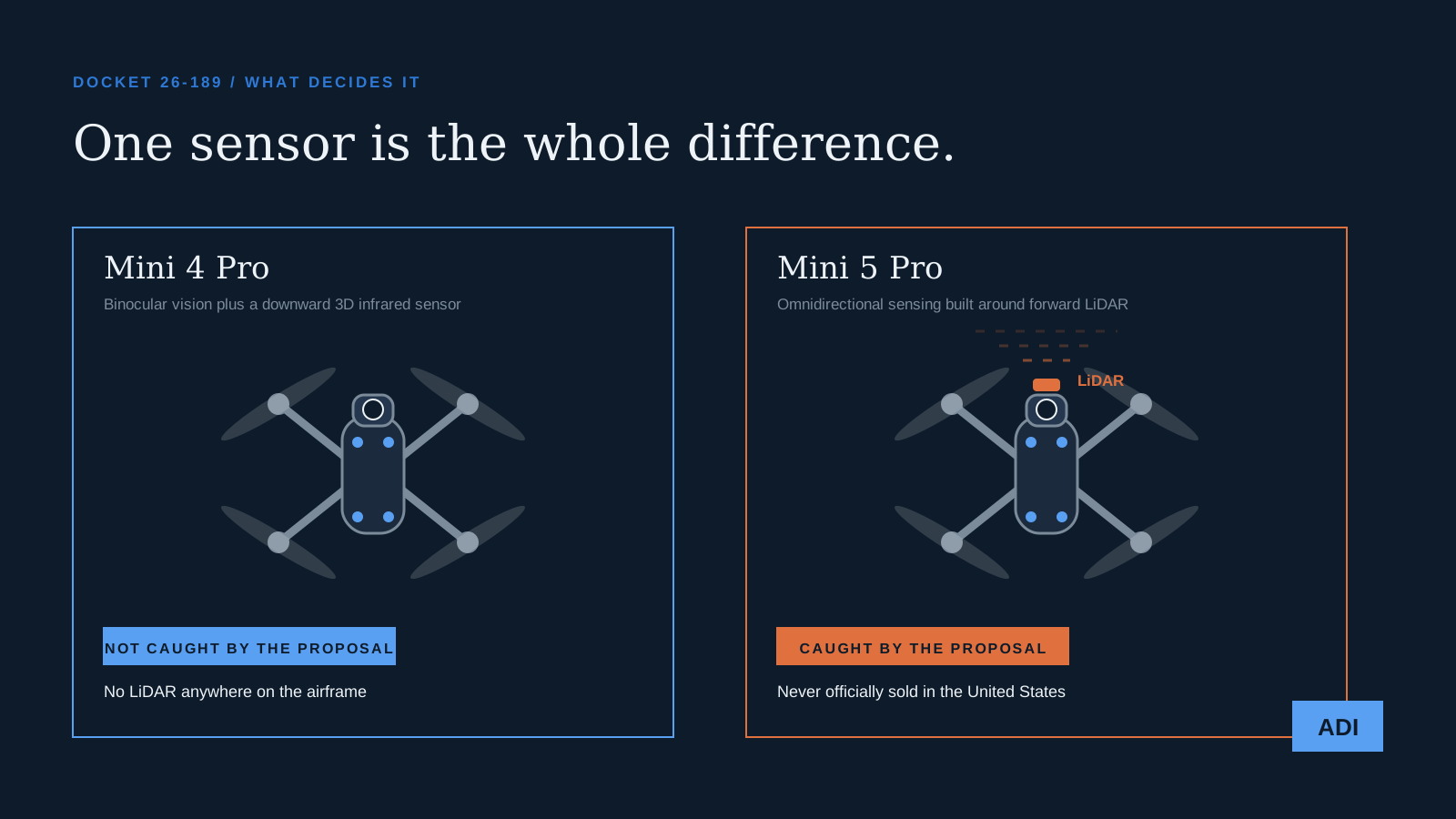
The Mini 4 Pro senses obstacles the older way. It carries an omnidirectional binocular vision system, pairs of small cameras looking forward, backward, sideways, up and down, working out distance from the difference between the two views. Underneath it adds a 3D infrared sensor for landing, effective to around eight metres.
Cameras and infrared, no laser ranging. Nothing on that airframe meets the description in the proposal, which means the Mini 4 Pro sitting in your case is not what this docket is about. It stays legal to own, legal to fly, and, as far as this proposal goes, legal to sell.
The Mini 5 Pro is
The Mini 5 Pro moved to LiDAR for forward sensing, which is what lets it see obstacles at night where a binocular vision system is effectively blind. It is a genuine improvement and it is exactly the component the proposal names.
There is a second layer of irony here for anyone in the United States. The Mini 5 Pro was announced in September 2025 and never officially came to the American market, so the aircraft this rule would ban from sale was already not for sale here. Buyers have been getting them through third party resellers and grey imports since launch.
What it means if you already own one
Nothing changes about flying. As with the Covered List decision in December, aircraft already in the country stay legal to own and to operate commercially. The restriction is on import and sale.
What it does mean is a thinner spares market for anything caught, and a real question about how long software support continues for a model a manufacturer can no longer sell here. If a Mini 5 Pro is doing paid work for you, a second airframe is worth more now than it was in June.
The rest of the proposal
LiDAR is the headline, and the docket sweeps wider. It covers thermal imaging payloads, docking stations for automated systems, aerosol dispensing aircraft of the sort used in agriculture, aircraft weighing fifty five pounds or more, and drones designed to integrate defense articles.
Thermal is the part that worries us most, because roof moisture surveys, solar site inspection, and building envelope work all depend on radiometric thermal payloads, and the domestic alternatives cost considerably more for equivalent capability. If that cost lands, it lands on the price of the survey. Docking systems being included also narrows a market that the rules on line of sight had already constrained.
The retroactive part
What has drawn the sharpest objection is that models already holding FCC authorization, granted by this same agency, would have it pulled. If adopted as written the prohibition would take effect roughly a hundred and eighty days after publication.
How to comment
Comments in docket 26-189 close on September 2, 2026, and they are filed through the FCC electronic comment filing system. A short, specific comment from somebody who uses this equipment carries more weight than a long argument about policy. Useful detail is concrete: what you fly, what the sensor does on your aircraft, what a replacement would cost, and what work would stop being viable.
Agencies do read them. The comment record visibly moved the Part 108 proposal, and this one is smaller and more technical, which means individual operators have proportionally more influence over it.
We are filing. If you run aerial inspection or mapping in Georgia and want to talk through what this would mean for your programme, get in touch.